Showing posts with label beginning photographers. Show all posts

Wednesday, October 5, 2016

// // Leave a Comment

5 Beginner Photography Tips On Taking Great Photos

5 Beginner Photography Tips On Taking Great Photos

Photographs can last a life time. This is the reason why cameras never go out of style; rather they just improve in settings and functions to aid people in capturing moments, emotions, and even history. But despite the growing number of photography enthusiasts, not a lot is eligible to take and produce a photo that can elicit a “Wow! That is magnificent” or “That is incredible” response. And though many beginner photography tutorials are already available teaching different photography techniques, photography types, camera modes and so on, many beginning photographers continue to fail in taking wonderful pictures.

Understand the Concept of Composition
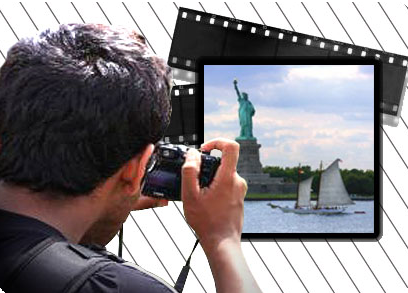

One of the most important things to keep in mind is that a good photograph is well composed. And composition is about everything that makes up the entire picture. Frame your scene before pressing the shutter of your camera. Check the placement of your subject. While centering the subject is fine in certain occasions, a good photograph would often have the subject off center, which adds more intensity to your photograph. Also, look for shapes, patterns, and lines as they can make good visual image.

Pay Attention to Exposure 

Another beginner photography tip to create a good photograph is to learn how exposure affects your images. Ever noticed why some pictures appear too dark or too washed out? Exposure is the measuring and balancing of light. And a poorly exposed image equates to being forgettable. Take control of your camera by learning and adjusting the shutter, aperture, or film speed. 

Capture Viewers’ Emotion

Learning beginner photography is fun because it allows you to capture different emotions of a given subject. However, a good photograph must also stir up the viewer’s emotion. So, whether you are up to take a picture of an elderly couple at a park or a starving child in a remote community, think what feelings you aim to evoke. How do you want your viewers to feel when they see your photographs? How intense is the emotion you want to stir up? Determine the feeling you want to affect rather than just shooting what you think is beautiful for you.

Convey A Story Through the Images 

Whether you are using a point and shoot camera or a DSRL, a good photograph always tell a story. Just consider the photograph of high-profiled individuals on the front cover or inside pages of TIME magazine, Reader’s Digest, or Forbes. An image of the person tells “who” the person is and “what” influence or power s/he has for his/her people. Additionally, a photograph of a place inundated by a hurricane tells a story of the calamity that left people at the edge of their lives. Photojournalism gives plenty of this kind and the story that each of the photograph tells sways the viewer’s feelings. 

Say Something About Life

There are too many things that happen in life, and whether you are only taking beginner photography or already in advanced photography, life is going to become an integral part of your subject. And a good photograph must say something about life and not just the action it creates. Show more than just the subject. An image of a marathon Olympics will surely look good in digital prints; likewise, a good angle lets you tell about life challenges and winning it. Additionally, a good image of sunrise can tell a new beginning or something more defined meaning for other viewers.
Photography is an art. The ability to capture and create a good photograph entails learning and experimentation. However, when people enroll for beginner photography courses they commonly associate good photographs with an expensive camera. On the contrary, a good photograph is produced with the elements listed above even before the photographer buys a premium camera brand.
Read More
// // Leave a Comment

Photography Gear Essentials for Beginning DSLR Photographers

Photography Gear Essentials for Beginning DSLR Photographers

Joining the bandwagon of beginning photography can be both exciting and overwhelming. First of all, choosing the right camera is in itself already tedious enough because you have to compare features and prices until you find what suits your purpose and budget. And then there’s the leveraging for the camera’s accessories that you needed whether you’re just a hobbyist or rooting for a future profession out of photography. But while you’re still a novice it doesn’t necessarily mean having to purchase half a dozen camera lenses and getting the newest top of the line camera equipment. Because the truth is, what you really need for now are just a few photography gear essentials to keep you going.

A Functional Camera Bag

Photography is not a cheap hobby or profession. The camera and the rest of the accessories you will be purchasing can get quite expensive and having a functional camera bag is naturally the most basic photography gear you should have—after the DSLR—to protect your investments. Lowepro, Kata, and Tenba have some of the great amateur photographer bags. Look for a bag that won’t only accommodate your camera and a few extra charger and batteries; rather, get a bag that has additional room for other useful camera accessories you might buy should you be ready for an upgrade.

Extra Batteries

Extra batteries are indispensable photography gear especially when travelling with your DSLR. In most cases when you’re already too engrossed with taking pictures, the last thing you’d want to worry about is running out of battery and not finding any nearest electrical outlet to re-charge it. So, don’t miss that precious scenery and capturing moments just because your camera’s battery indicator is furiously blinking its last straw at you.

Spare Memory Cards

Just like a camera battery you don’t want to rely with just one memory card and run out of spaces for your photographs in the middle of your shooting session. As an amateur photographer, one thing you would need to learn early is to be always prepared so you can enjoy every minute of taking photos.

A Sturdy Tripod

A tripod is a very common photography gear not just among amateur photographers, but even among professional ones. The use of tripod is best when taking nature shots, portrait or macro-photography. It is also advisable for long exposure shots, slow shutter speeds or low light situations. The price of a good tripod can range between $200 and higher. Gitzo and Manfrotto have several of the most quality tripods for digital SLRs.

Remote Shutter Release

You must have experienced having to re-set the timer of a camera when taking pictures and can be bothersome at one point or another. Having a remote shutter release allows a photographer to manipulate the camera and take pictures from a distance. Whether you want to be in the shot or just the one giving directions, having this photography gear can help you take great photos without needing to deal with shaky incidents that can blur the image.
There are several other photography gear essentials you may find yourself investing into as you become more skilled in photography. Nonetheless, a high price does not always mean an excellent result. Understanding how your camera works, how exposure and composition can make a photograph stand out, and making your accessories work to your advantage to create great pictures are all vital elements to thrive in the industry.
Read More

Tuesday, October 4, 2016

// // Leave a Comment

3 Important Portrait Photography Basics You Need To Know

3 Important Portrait Photography Basics You Need To Know

Portrait or portraiture is one of the most interesting genres of photography. When taken properly, it can dramatically deliver the mood, personality, character, story, and essence of the subject—normally, a person. But more than having an expensive DSLR and a stunning subject, some portrait photography basics have to be learned in order to create a smashing portrait that produces the intended result.

Check Your Camera Settings and Choose the Right Lens

One important portrait photography basics that is often misunderstood particularly by beginning photographers is their camera settings. How you adjust your camera settings greatly affects the outcome of your portrait. If you’re aiming for classic portrait photography, you have to remove anything that’s distracting from the background of the shot. Use wide apertures to produce a shallow depth-of-
field— f/2.8 or f/4. Moreover, lower your ISO settings; otherwise, it can create digital noise on your photograph.
On the other hand, choosing a lens that would flatter your subject is more important than buying every top of the line camera lens in the market today. The rule of thumb for head and shoulder portraits is that the length of your lens should be double the diagonal of the film plane or in the case these days the digital sensor. Among the recommended lens for portrait photography are Canon EF 70-200mm f/2.8 L
IS II USM, Canon EF 85mm f/1.2 L II USM Lens, Canon EF 100mm f/2.8 L IS USM Macro Lens, and Canon EF 70-200mm f/2.8 L USM Lens.

Lighting

When it comes to photography basics, lighting is largely emphasized. This is because, no matter how striking your subject is, your prop, and even your location, a poor lighting can destroy the message you want to convey in your photograph. Unlike doing portrait photography in a studio where lighting can be 100% controlled, outdoor location demands a more challenging task. Sunlight will practically become
your major source of light in your portrait, and therefore, you should understand how to use it properly. That means, knowing where to position your subject without going against the light and bringing with you some white cardboard or aluminum sheet you can use to bounce reflected light.

Make Your Subject Relaxed

Engaging your subject in a conversation is one way to make him/her feel relaxed. Sadly, even the most professional model can get fidgety in front of a photo shoot especially if they are uncomfortable with the photographer taking their pictures or with the prop they have on themselves. Find a way to develop a good rapport with your subjects to make them feel at ease and become more open with your
suggestions. Interacting with your subject is an important photography basics tip you would get not only from many photography books but also from the more seasoned photographers.
Portrait photography can reveal a series of emotions to a viewer. As the industry continues to advanced, you will be learning a lot more photography basics that will help you capture the intended expression and message you want to convey. Learn to explore with different angles. Alter your perspectives, and play with the backgrounds so you can go beyond the common styles of portrait photography and produce finer images
Read More